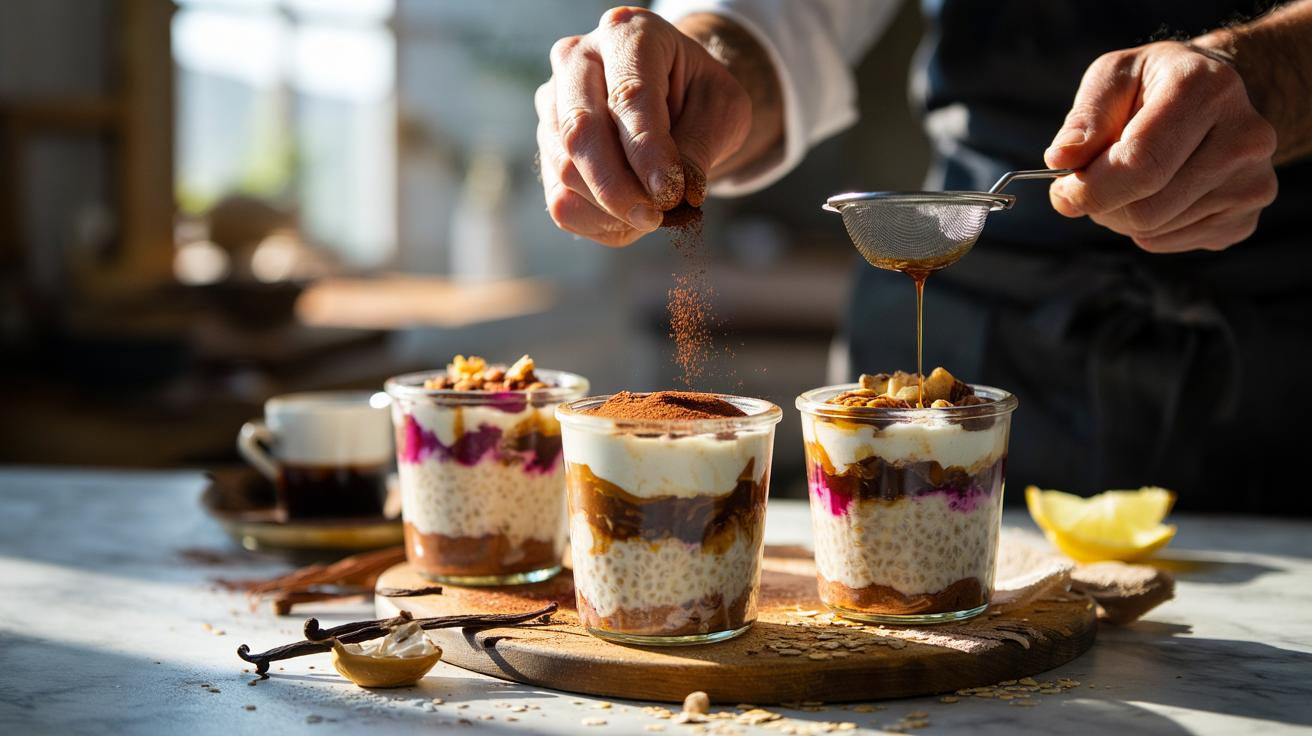
In a nutshell
- 🍮 Chef’s ratio: 1 part rolled oats + 1 part milk + 0.5 part yoghurt, plus 1 tsp chia, pinch of salt, and vanilla; stir, rest, stir, then chill 8–12 hours for a custard-like base.
- 🍫 Dessert layers: balance sweetness (maple, honey, dates) with acidity and a pinch of salt; add contrast via ribbons of nut butter/tahini and crunchy toppings like toasted nuts or cacao nibs.
- 💪 Nutrition without the crash: aim for 20–25 g protein (Greek yoghurt, whey/pea protein, or silken tofu), add chia/flax for fibre and healthy fats, and lean on fruit to moderate sugars.
- 🥛 Texture control: adjust thickness with extra chia or milk; think pastry cream, not porridge; store in jars, add toppings at the last moment for crunch integrity; use gluten-free oats or dairy-free milks as needed.
- 🍰 Five flavour blueprints: Tiramisu, Banoffee, Black Forest, Lemon Cheesecake, and Carrot Cake deliver bakery-style profiles tailored for busy mornings.
Chefs love a formula. It frees creativity while guaranteeing results at 7 a.m., when the coffee hasn’t quite landed. Overnight oats fit that mould: a simple ratio-driven method that turns a sensible bowl into a pudding-like treat. The trick is balancing creaminess, sweetness, and texture so breakfast tastes like dessert yet fuels the day. The right base, the right thickener, and a finishing layer of crunch make all the difference. Below is the approach pastry pros lean on, tested against busy mornings, wobbly schedules, and British weather. Once you know it, you can riff endlessly—no recipe card, just instinct and a spoon.
The Pastry Chef’s Overnight Oats Ratio
The core is simple: 1 part rolled oats, 1 part milk, 0.5 part thick yoghurt or creamy alternative. That’s your custard-like base, the bit that tricks the palate into thinking “pudding” rather than porridge. Add 1 teaspoon chia seeds per serving for body, a pinch of salt to wake flavours, and vanilla for roundness. Start with a proven ratio and you cannot go wrong. Stir, rest for five minutes, stir again to prevent clumping, then chill for 8–12 hours. Use rolled oats (not instant) for better bite. For dairy-free creaminess, coconut yoghurt works, though you may reduce chia slightly to avoid over-thickening.
| Component | Chef’s Pick | Amount (1 serving) |
|---|---|---|
| Oats | Rolled, not instant | 50 g (1/2 cup) |
| Liquid | Whole milk or oat/almond | 120 ml (1/2 cup) |
| Creamy booster | Greek yoghurt or coconut yoghurt | 60 ml (1/4 cup) |
| Thickener | Chia seeds | 1 tsp |
| Sweetener | Maple, honey, or dates | 1–2 tsp, to taste |
| Flavour | Vanilla, cocoa, spices | 1 tsp vanilla or 1 tbsp cocoa |
Consistency is your compass. Too loose? Add a teaspoon more chia and give it 10 minutes. Too thick? Loosen with milk until it ripples off a spoon. Think pastry cream, not stodgy porridge. Chill in lidded jars, then layer toppings just before serving for crunch integrity.
Sweetness, Texture, and Flavour: Building Dessert Layers
Desserts seduce via contrast. Chefs treat overnight oats the same way: creamy base, flavour-packed middle, crunchy crown. Sweetness first. Maple syrup adds caramel notes; honey blooms floral perfume; blitzed dates give fudgy depth. Balance that with acid—lemon zest, a splash of cold brew, or a spoon of tart yoghurt—to keep the spoon returning. Salt is the stealth tool, a tiny pinch that sharpens chocolate, brightens fruit, and reins in sweetness. Fold, don’t whisk, to keep body. For a swirl effect, ribbon in nut butter or tahini rather than blending it fully.
Texture is the clincher. Toasted nuts, cacao nibs, granola crumbs, or a shard of sesame brittle bring crackle. Macerate berries with a whisper of sugar and lemon, then spoon the ruby juices between layers for patisserie drama. Cocoa powder deepens chocolate notes; cardamom or mixed spice nudges warmth that reads like cake. If you want a soufflé-light top, whip a spoon of yoghurt with a dash of milk, then float it over the oats and dust with cocoa. The first bite should crunch, the second should melt, the last should beg a repeat.
Healthier Indulgence: Nutrition Tweaks Without the Sugar Crash
A pudding mood, a breakfast mission. That means boosting protein, fibre, and healthy fats while moderating sugars. Aim for 20–25 g protein per serving by using Greek yoghurt, a scoop (10–15 g) of unflavoured whey or pea protein, or silken tofu blended into the milk. Chia and flax seed add fibre and omega-3, and they help set the mix. Choose fruit for sweetness where possible—ripe banana, stewed apple, roasted pear—then adjust maple or honey sparingly. When the base is rich and well-salted, you’ll need less sugar to feel satisfied.
Think low-tempo energy. Rolled oats bring beta-glucan for steady release; nuts and seeds steady the glycaemic curve. If calories matter, use semi-skimmed milk, then finish with a teaspoon of nut butter for flavour without heaviness. Lactose-free or fortified plant milks keep calcium on target. For coeliacs, certified gluten-free oats are your friend. A practical UK tip: prep three jars on Sunday night, rotate flavours, and you’ve covered midweek. Indulgence is an effect, not a sugar tally—achieve it with texture, aroma, and contrast.
Five Chef-Tested Flavour Blueprints
Tiramisu: Stir cocoa and espresso into the base; fold in a mascarpone–yoghurt ripple; finish with cocoa dust and a few cacao nibs. A micro-grate of dark chocolate sells the patisserie fantasy. Bitter, creamy, sweet—classic Italian balance.
Banoffee: Slice banana, then spoon on “date toffee” (dates blitzed with a splash of milk and pinch of salt). Add crushed oat biscuit crumbs and a thread of yoghurt “cream”. A lick of vanilla turns it bakery-fresh.
Black Forest: Cherry compote between layers, cocoa in the base, toasted flaked almonds on top. A dot of kirsch in the compote for adults. It eats like gâteau, yet works like breakfast.
Lemon Cheesecake: Lemon zest and a squeeze of juice in the base, cream cheese blended with yoghurt for the swirl, topped with crushed oatcakes and poppy seeds. Sweeten lightly with maple to keep the citrus bright.
Carrot Cake: Grated carrot, sultanas, cinnamon, nutmeg, and ginger in the oats; walnuts and a yoghurt–honey drizzle to finish. A pinch of salt makes the spices sing. The texture mimics the crumb of a good loaf.
Overnight oats aren’t a recipe so much as a mindset: a ratio, a few techniques, and a dessert-maker’s eye for contrast. Keep the base luscious, lay in flavour with restraint, and save crunch for the final flourish. Taste like dessert; perform like breakfast. With that in your pocket, your fridge becomes a pastry counter waiting to happen—no oven, no hurry, no compromise. Which flavour blueprint will you try first, and what twist will make it undeniably yours?
Did you like it?4.4/5 (27)