In a nutshell
- 🥬 Turn kitchen scraps like romaine bases, spring onions, celery stumps, and carrot tops into fresh greens on a sunny windowsill—ideal for cut-and-come-again salads.
- 💧 Start with the simple water method: keep roots just submerged, change water every two days, ensure clean jars, then pot up in peat-free compost for better flavour and longer yields.
- ⏱️ Expect quick wins: spring onions in 4–7 days, lettuce in 7–10, celery in 10–14; stagger starts weekly to maintain a steady supply.
- 🪴 Boost success with bright, indirect light, light feeding (half-strength seaweed), and regular snips; microgreens from coriander seed or lentils add speedy, peppery extras.
- ⚠️ Tackle issues fast—slime and smells (refresh water), leggy growth (more light), gnats (dry topsoil, sand cover)—and prioritise food safety by rinsing scraps and discarding anything off.
Across Britain, thrifty growers are reviving a charming tradition: turning yesterday’s peelings into tomorrow’s lunch. The kitchen scrap hack is simple, cheap, and oddly satisfying. Save the bases of your lettuce, the rooty ends of spring onions, even the frilly tops of carrots, and coax them back to life on a sunny sill. It’s not magic. It’s plants doing what plants do. You can start with nothing more than a glass of water and a bit of patience. For renters, students, or families dodging the weekly salad splurge, this windowsill trick delivers freshness, flavour, and a small victory against food waste.
From Scraps to Salad: What Actually Regrows
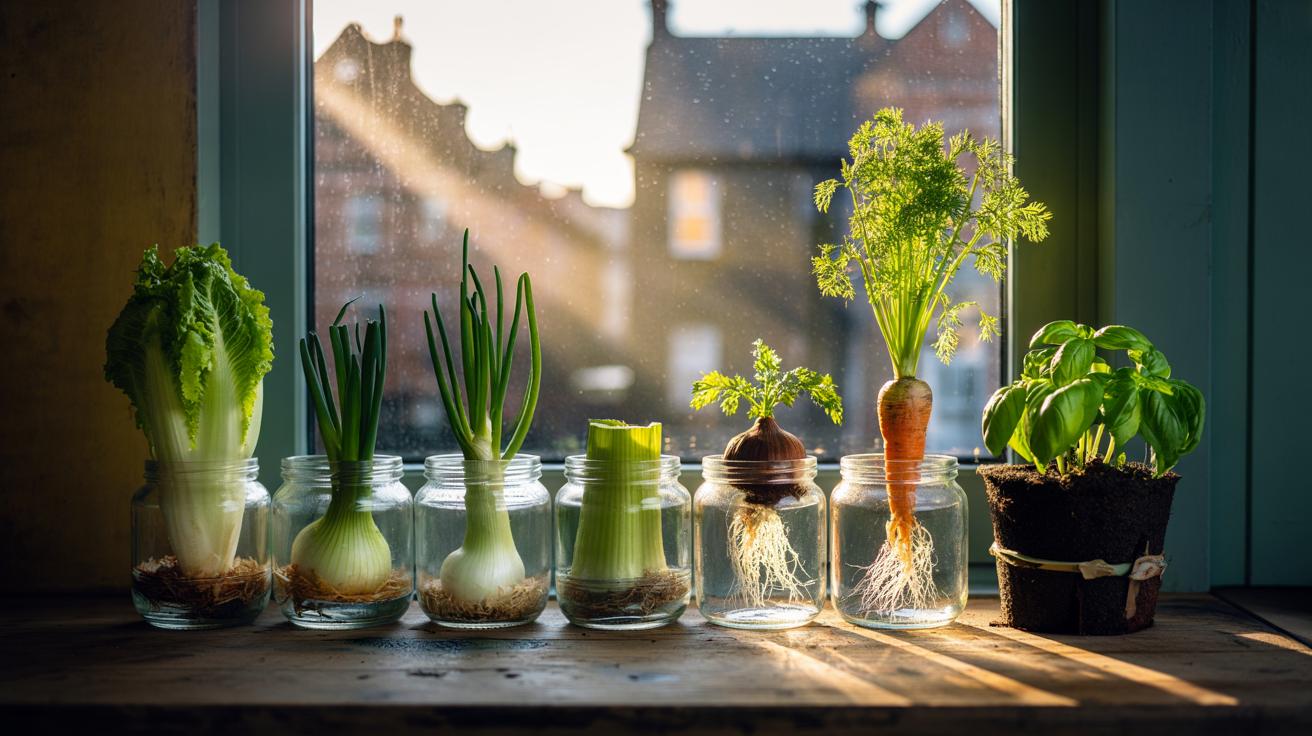
Not every leftover springs back equally. Some scraps truly shine. The base of a romaine lettuce will push out crisp new leaves, perfect for wraps and quick salads. Spring onions (scallions) regrow fastest, shooting green again in a few days, and they keep giving with repeat cuts. The knobbly bottom of celery will flush new stalks, tender and aromatic. Even carrot tops produce feathery greens with a parsley-like kick, ideal for pesto or chimichurri, though the roots won’t return. Think leafy regrowth, not full supermarket replicas.
What about herbs? Soft-stemmed basil and mint can re-root from market cuttings; once established, they power through regular snips. Coriander is fussier in water but thrives as microgreens. The rule of thumb is simple: if the scrap has a living crown or nodes, you have a shot. Keep expectations grounded. Regrown lettuce won’t make a dense heart, but it will deliver fresh, mild leaves for sandwiches and bowls. For fast results and minimal fuss, spring onions are the UK fan favourite—cheap, speedy, and forgiving.
Step-by-Step: The Windowsill Water Method
Set up is easy. Find a jar, tumbler, or ramekin. Place the lettuce base or celery stump cut-side up, and add just enough water to touch the roots or the cut surface. For spring onions, stand the white ends upright with roots submerged and greens above the waterline. Change the water every two days to prevent slime. Clean jars and fresh water are non-negotiable. A south-facing window gives zip-fast growth; east or west works too. Avoid radiators or draughts that stress tender regrowth.
Stability helps. Pebbles at the bottom anchor bulky bases. Toothpicks can perch tricky pieces at the right height. Trim any mushy bits early. If algae tints the water green, rinse and reset. Use rainwater if you have it; hard tap water is fine but might leave limescale. After one to two weeks, when white roots thicken and new leaves look sturdy, snip what you need. For long-running success, shift strong regrowth into compost after 10–14 days. Water alone feeds for a while; compost keeps the buffet open.
Potting Up for Bigger Yields and Better Flavour
Once roots are humming, potting up unlocks better texture and taste. Choose a small container (12–15 cm wide) with drainage holes. Fill with peat-free compost and sit the rooted base just proud of the surface. Water gently and keep in bright, indirect light. Feed lightly—half-strength liquid seaweed every two weeks is plenty. In compost, lettuce leaves thicken, celery sweetens, and spring onions become sturdier, with punchier greens. Soil turns a novelty into a steady supply.
Manage growth like an editor, not a lumberjack. Harvest little and often using the cut-and-come-again approach, snipping outer leaves and leaving the centre to power on. Keep pots close in a tray for tidy watering and drip control. Hot spells can trigger bolting; a sheer curtain softens midsummer glare. In winter, pull pots a few inches from frosty panes to avoid chill shock. Don’t forget microgreens: a shallow tray of compost and a scattering of whole coriander seed, mustard, or even supermarket lentils yields peppery shoots in 7–10 days, perfect for lifting weekday lunches.
Costs, Timelines, and Yields at a Glance
How much do you really save? A weekly bunch of spring onions at £0.60–£0.80 adds up; regrowing from trimmings covers the gap with near-zero cost. Lettuce bases that usually hit the bin can deliver two to three light harvests, enough for wraps, garnish, and side salads. Celery is slower, but the flavour is bright and clean. Turn waste into worth in under a fortnight. Below is a quick cheat sheet for planning your sill-side garden.
| Scrap Crop | Best Method | Days to First Harvest | Repeat Harvests | Light Needs |
|---|---|---|---|---|
| Spring onions | Water start, then pot | 4–7 days | 3–5 cuts | Bright, indirect |
| Romaine lettuce base | Water start, then pot | 7–10 days | 2–3 trims | Bright, indirect |
| Celery stump | Water start, then pot | 10–14 days | 2–3 trims | Bright, indirect |
| Carrot tops (greens) | Water on pebbles | 7–12 days | 1–2 trims | Bright shade |
| Basil cuttings | Root in water, then pot | 10–15 days | Ongoing | Bright, warm |
For space-limited homes, stagger your starts weekly. That rhythm evens out supply so salads never bottleneck. If you’re counting pennies and minutes, prioritise spring onions and lettuce—they deliver the fastest wins for effort spent.
Common Problems, Fixes, and Food Safety
Windowsills bring quirks. Slime and smell? Change water more often and trim decaying tissue. Pale, leggy leaves signal low light—move closer to the window or rotate daily. Brown leaf tips often mean draughts or dry air; add a water tray nearby to lift humidity. Fungus gnats buzzing your compost? Let the top inch dry between waterings and cover with a thin layer of sand. Tidy maintenance keeps the micro-garden humming.
Food safety matters. Start with clean scraps from fresh produce, rinse well, and use clean containers. Don’t eat anything that looks or smells off. Indoor regrowth won’t match field-grown mineral depth, so feed lightly once potted and refresh compost every few months. Skip potatoes on the sill; low light and warmth risk greening and bitter glycoalkaloids. Understand the limits: regrown lettuce provides tender leaves, not full heads. That’s fine. Lean into it—mix with microgreens, herbs, toasted seeds, and a punchy dressing for salads that taste intentional, not improvised. Small, regular harvests beat one big flop.
This little ritual changes how you shop and cook. It trims waste, cuts costs, and keeps flavour within arm’s reach, no garden required. A few jars, a splash of water, and scraps that once seemed doomed become a living larder on the sill. When sunlight is scarce, your pots still tick over, ready for a quick snip at supper. It’s humble, practical, quietly joyful. Ready to line up your jars and see what sprouts first—spring onions, lettuce, or something surprising from your own fridge?
Did you like it?4.5/5 (28)