In a nutshell
- 🧴 Cleaning pros recommend ketchup as a gentle acid gel that dissolves limescale and oxidation, restoring shine to chrome, brass, and stainless steel fixtures.
- 🔬 It works because tomatoes and vinegar provide citric and acetic acids, while the sauce’s thickness boosts dwell time—softening deposits without harsh scrubbing.
- 🧰 Method: wipe, apply a thin layer for 5–10 minutes (up to 15 on brass/copper), don’t let it dry, gently scrub with a soft toothbrush, then rinse thoroughly and buff dry.
- ⚠️ Surface guide: fine for chrome and stainless, good for solid brass/copper, caution on nickel or gold-plated finishes, and avoid on natural stone like marble and limestone.
- 💷 Cost and eco wins: under £1 per bottle, low fumes, easy on indoor air; limits include heavy scale, peeling chrome, and delicate finishes where manufacturer guidance should take priority.
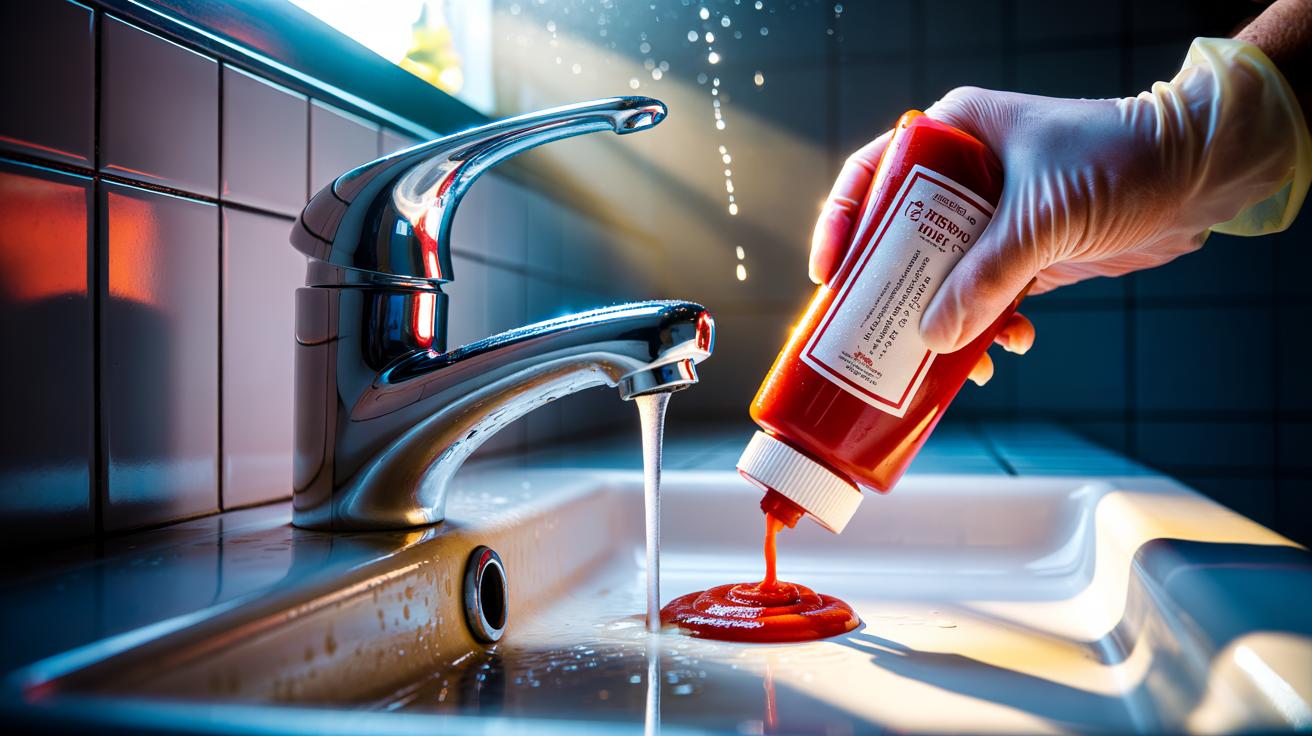
British bathrooms battle the same enemies week after week: hard-water limescale, soapy film, dull taps that refuse to shine. You’ve likely tried bleach, vinegar, specialty polishes. Here’s the curveball cleaning pros keep whispering: ketchup. The humble condiment sitting in your fridge can revive chrome, brass and stainless fixtures with surprising ease. It clings, it dissolves mineral build-up, and it buffs to a mirror. Strange? Yes. Effective? Very. I tested tips from professional cleaners and metal restorers to see whether tomato magic really stands up to London water and family bathrooms. The results were eye-opening—and they’ll probably save you a few quid.
Why Ketchup Works on Bathroom Fixtures
At first glance, ketchup is just a chip’s best friend. But in cleaning terms, it’s a gentle acid gel. Tomatoes bring citric acid, vinegar adds acetic acid, and the sauce’s thickness keeps those acids parked on a tap long enough to soften limescale and oxidation. That dwell time is the secret. Liquids slide off; ketchup sticks. As the acids loosen mineral deposits, a soft cloth or toothbrush can whisk them away without scratching the finish. Gentle chemistry beats aggressive scrubbing. On brass and copper, tarnish lifts to reveal a richer tone. On chrome and stainless, that flat grey cast gives way to crisp reflection.
There’s also a practical upside: no fumes, no harsh bleaches, no headache. The consistency is controllable—dab on corners, spread under handles, wrap a little cling film around a tap base to stop it drying out. Always do a small patch test, especially on coated or lacquered fittings where manufacturers warn against acids. And remember, ketchup won’t fix pitting or deep scratches; it polishes, it doesn’t resurface. Used right, though, this pantry staple earns its place in your caddy.
Step-By-Step: How to Use Ketchup on Taps and Handles
Gather a microfibre cloth, an old soft toothbrush, paper towels, and a small bowl of ketchup. Start by wiping the fixture with warm water to remove loose soap scum; dry lightly. Apply a thin but even layer of ketchup to problem areas—around aerators, beneath the spout, under the mixer handle. Leave for 5–10 minutes for chrome and stainless; up to 15 for solid brass or copper. Do not let it fully dry. If it starts to crust, mist with water or cover with film to keep it active.
Agitate gently with the toothbrush, paying attention to tight seams where limescale hides. Rinse thoroughly with warm water. This bit matters: Rinse completely and buff dry. Any residue left behind will smear. Finish with a dry microfibre to bring up the shine. For stubborn scale around the aerator, unscrew it, dab ketchup on the thread and screen, wait 10 minutes, then rinse and refit. Need extra oomph? Sprinkle a touch of bicarbonate of soda over the ketchup before scrubbing; the mild abrasion speeds removal without gouging metal.
What You Can and Can’t Clean With Ketchup
Ketchup is brilliant on many fixtures, but not all finishes welcome acids. Use this quick guide before you slather the sauce.
| Surface | Can Use Ketchup? | Typical Dwell Time | Notes |
|---|---|---|---|
| Chrome taps | Yes | 5–10 min | Patch test; avoid prolonged contact on damaged plating. |
| Stainless steel | Yes | 5–10 min | Buff with grain; rinse thoroughly to prevent smearing. |
| Solid brass/copper | Yes | 10–15 min | Removes tarnish; may reveal patina changes. |
| Nickel or gold-plated | Caution | 2–3 min | Very brief test only; acids can dull delicate plating. |
| Natural stone (marble, limestone) | No | — | Acids etch stone; keep ketchup off splashbacks. |
If in doubt, consult the fixture manual. Many “luxe” finishes—brushed nickel, oil-rubbed bronze, lacquered brass—specify pH-neutral cleaners only. Ketchup works well for everyday chrome mixers and stainless shower controls, especially where hard water leaves that chalky ring at the base. For shower screens or tiles, switch to white vinegar or a specialist descaler formulated for glass and grout. Keep acidic cleaners away from porous stone and cement-based grout.
Cost, Sustainability, and When to Skip the Hack
There’s a frugal logic to this trick. A supermarket own-brand bottle of ketchup costs under £1 and will service dozens of cleans, while a metal polish can run to £4–£8 for similar results. Because ketchup is food-safe, there’s less worry about fumes in tight bathrooms or residues around young children. Lower VOCs, fewer dyes, no chlorine. It’s also a tidy way to use up an almost-empty bottle—squeeze the last bits into your cleaning kit instead of the bin.
That said, know its limits. For heavy scale build-up on an old rental tap, a dedicated descaler (citric acid crystals or white vinegar soaks) may be faster. Deep pitting or peeling chrome? Cosmetic only; no cleaner will restore metal that’s physically gone. If you have exotic finishes under warranty, stick to the manufacturer’s guidance. And always finish with a protective buff: a drop of washing-up liquid in water leaves a film that slows re-deposit, or a pea-sized smear of mineral oil can repel water beads. Shine lasts when you dry and protect.
It’s rare that a condiment outperforms cupboard chemicals, but this one earns the hype. Used thoughtfully, ketchup cuts through limescale haze, revives metal tone, and leaves taps sparkling without the harshness of bleach. It’s cheap, quiet, and oddly satisfying. Next time your basin fittings look tired, try the red stuff before you reach for the heavy artillery. If it doesn’t dazzle in ten minutes, you’ve lost nothing but a spoonful. Are you tempted to test this tomato trick on your own taps, or will you stick with your go-to polish?
Did you like it?4.5/5 (21)