In a nutshell
- 🔁 Tin (aluminium) foil behind radiators reflects infrared heat back into the room, cuts losses into cold masonry, helps rooms reach setpoint faster, and softens that chilly “cold wall” feel.
- 🧱 Works best on external, uninsulated walls typical of older UK homes; benefits are smaller on insulated cavities or internal partitions, but can still improve responsiveness.
- 🛠️ Fit it safely: attach foil to the wall, not the radiator, shiny side facing the room, keep a small air gap, and don’t obstruct the TRV; consider durable reflective panels for a neater, longer‑lasting finish.
- 💷 Expect modest, real gains: trials suggest 10–20% lower heat loss from the wall behind the radiator and a few pounds saved per room each season—more when combined with draught‑proofing, curtains, and correct TRV settings.
- ⚠️ Not a cure‑all: limited impact with insulated walls, internal walls, underfloor heating, or fan convectors; prioritise bleeding and balancing radiators, TRVs, loft insulation, and safe use (never with electric heaters or damp‑prone walls).
As energy bills bite and the evenings draw in, householders are hunting for smart, low-cost tricks to keep rooms warm without cranking the thermostat. Eco experts say one deceptively simple tactic keeps delivering: placing tin (aluminium) foil behind radiators on external walls. The idea is straightforward. Reflect heat that would otherwise soak into the brickwork back into the room. It’s cheap, quick, and doable in a lunch break. For homes with older, uninsulated walls, the difference can feel immediate. It won’t replace insulation or modern controls, but as a winter hack, it punches above its weight and helps stretch every kilowatt-hour.
Why Tin Foil Behind Radiators Works
Radiators emit warmth in three ways: convection, which moves warm air around the room; conduction, where the wall absorbs heat; and radiant heat, infrared energy that travels in straight lines. Standard painted walls act as sponges, soaking up radiant heat and re-emitting it slowly to the outside. A shiny, low-emissivity surface changes that balance. Aluminium foil reflects a significant portion of infrared back into the room, trimming losses into cold masonry and helping your heating system reach set temperatures faster.
The gain is most notable when radiators sit on external, uninsulated walls. In a typical British terrace or pre-1990s semi, that’s common. If your wall is solid or poorly insulated, a reflective layer behind the radiator can recover heat you’ve been paying to lose. Newer homes with cavity insulation or internal wall insulation will see smaller benefits, but even they can improve responsiveness. Think of it as improving the radiator’s aim. Heat goes where you want it: into people, furnishings, and the air you breathe, not the frost beyond the bricks.
There’s also comfort psychology. Rooms feel cosier when surfaces stay warmer, because radiant exchange between your body and the room declines. By nudging wall temperatures up on the room side, foil reduces that chilly “cold wall” sensation. The result is subtler than a roaring fire. Yet it often allows a thermostat nudge downward, saving fuel and smoothing temperature swings.
How to Fit Foil Safely and Effectively
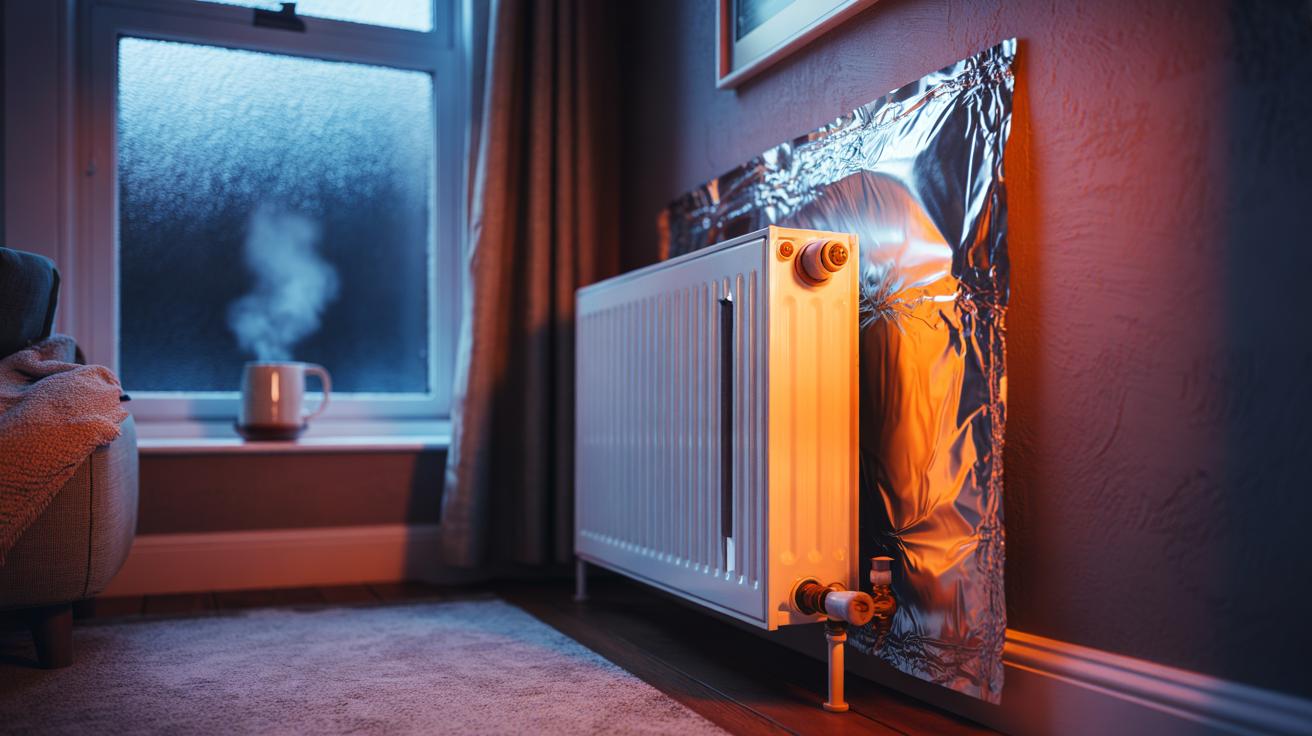
You don’t need a plumber. You need a roll of aluminium kitchen foil, scissors, and a way to mount it behind the radiator. Purpose-made reflective panels outperform basic foil, but foil still works when installed well. Cut sheets to the radiator’s width, then fix them to the wall, shiny side facing the room, leaving a slight air gap. Use heat-resistant double-sided pads or minimal strips of decorator’s tape on painted plaster. Do not stick foil to the radiator itself—attach it to the wall.
Keep edges neat and clear of valves. The Thermostatic Radiator Valve (TRV) must sense room air, not trapped heat, so don’t wrap foil near the valve head. A few short vertical strips across the radiator’s back area often work better than one huge sheet, letting air circulate freely behind. If the gaps are tiny, corrugate a cardboard backing, then foil its room-facing side to maintain an air space. Never use foil with electric panel heaters or storage heaters.
Check for damp or flaking paint first. If the wall is cold and clammy, resolve moisture problems before adding a reflective layer. The foil may slightly reduce wall temperature, so in borderline cases use breathable, purpose-made radiator reflectors. Finally, keep this hack in perspective. It’s a complement to bleeding radiators, balancing the system, and sealing draughts. Small, careful adjustments, done safely, add up to a warmer room and a leaner bill.
What Savings Can You Expect This Winter?
Expect modest, real-world gains—not miracles. For a radiator on an uninsulated external wall, independent trials have reported heat-loss reductions of 10–20% from the wall section behind the radiator. Translate that into bills and you might shave several pounds per radiator per heating season, more in very cold spells or in rooms that run long hours. Multiply across a whole ground floor and the numbers become interesting, especially when the outlay is pennies.
| Option | Upfront Cost | Estimated Saving | Notes |
|---|---|---|---|
| Kitchen foil (DIY) | £1–£3 | £3–£10 | Best on uninsulated external walls |
| Reflective panel | £5–£15 | £5–£15 | More durable; easier install |
| No reflector | £0 | £0 | Higher wall heat loss |
Figures vary with fuel price, wall type, and radiator runtime. If your boiler cycles less and rooms hit setpoint faster, your thermostat will spend longer “coasting” rather than “chasing.” That’s where the quiet savings live. Combine the hack with thick curtains at night, sealed letterboxes, and correct TRV settings, and the cumulative effect grows. Think marginal gains, multiplied.
When Foil Doesn’t Help—and What to Try Instead
Not every home needs this. If your external walls are properly insulated or radiators sit on internal partitions, a reflector yields slim returns. Underfloor heating? Irrelevant. Convectors with deep fins and fans rely more on air movement than radiant exchange; foil won’t change much. And in tiny rooms with limited radiator clearance, installation can be fiddly. Use judgment before you reach for the roll.
If foil isn’t for you, there are better upgrades. Fit TRVs where missing, so rooms stop overheating. Balance radiators so all heat evenly. Bleed out trapped air. Add radiator shelves above units on external walls to kick warm air further into the room. Shut heavy curtains after dusk but keep them off the radiator fronts. Stop draughts around skirting boards and floorboards. Each step is small. Together they’re meaningful.
For lasting gains, prioritise insulation and controls. Loft top-ups are cheap wins. Smart thermostats and zoning shave wasted hours of heat. Where feasible, choose high-efficiency reflective panels instead of kitchen foil; they’re sturdier and kinder to paintwork. And always keep safety in mind: no foil near electrical heaters, no blocked vents, no covering of TRVs. Comfort comes from a system working in harmony, not a single silver bullet.
In a winter shaped by high prices and sharper cold snaps, putting tin foil behind radiators is a classic British hack that still earns its keep. It’s frugal. It’s quick. It squeezes more warmth from what you already buy. The science is sound, the risks manageable, and the payoff rises in older, chillier homes. Pair it with good habits and a touch of maintenance, and your rooms will feel noticeably kinder. Will you try the foil trick this week—or is there another low-cost heat-saving tactic you’re ready to test first?
Did you like it?4.6/5 (21)