In a nutshell
- 🧴 The £3 bottle trick uses a simple wrinkle-release spray: mist, smooth with hands, hang to dry—ideal for everyday shirts, tees, and uniforms, saving hours of ironing each week.
- 🧪 DIY recipe (per 500 ml): ~480 ml water, 1–2 tsp fabric conditioner, 1 tsp white vinegar; shake, patch test, and apply a light mist—avoid over-wetting for best results.
- 🧵 Fabric fit and limits: effective on cotton, blends, polyester, viscose, jersey, lyocell, and denim; cautious on linen; avoid dry-clean-only wool tailoring, silk, leather, and suede; won’t deliver razor-sharp creases.
- ⏱️💷 Real savings: many households see 60–70% fewer items needing a full press; irons draw 2–3 kW, while this costs under 2p per garment and extends fabric life—great for travel and small spaces.
- ⚡ Quick-use tips: hang on a sturdy hanger, mist from 20–30 cm, smooth and tug seams, speed drying with a fan or brief hairdryer pass; label the bottle and keep scents minimal for sensitive skin.
Ironing eats evenings. It steals Sunday afternoons. Across Britain, baskets brim and boards groan while shirts demand crisp creases that few of us have time to chase. Here’s the quiet revolution: a £3 bottle and a simple wrinkle-release spray routine that trades heat and hassle for quick spritzes and smooth finishes. It isn’t wizardry; it’s fabric science working in your favour. Spritz, tug, hang, done. For everyday creases on everyday clothes, this trick can free hours each week without touching an iron. Perfect for school uniforms, gym kit, T‑shirts, and those office tops that crumple on the commute home.
What Is the £3 Bottle Trick?
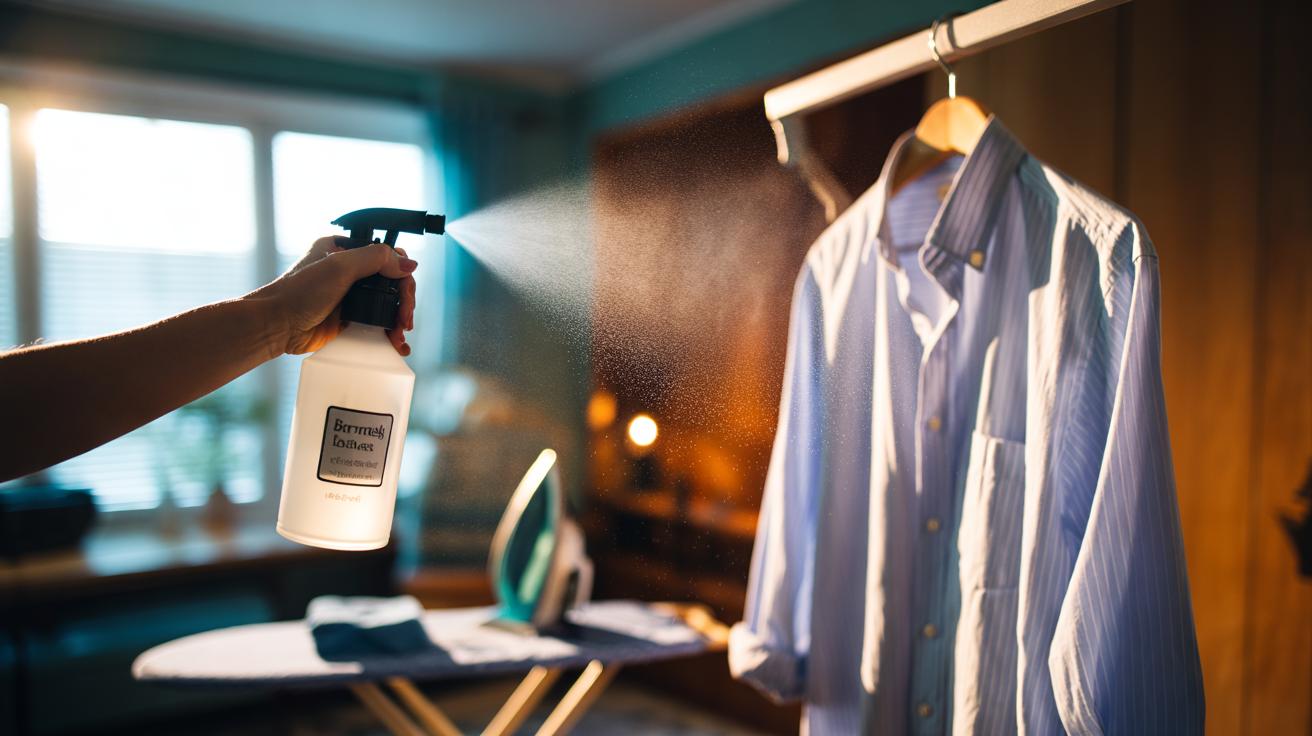
The “trick” is disarmingly simple: use a creases-off spray—either a shop-bought crease releaser (often around £3 in UK supermarkets and discount stores) or a homemade mix—inside a cheap trigger bottle. Lightly mist your wrinkled garment while it’s hanging, smooth the fabric with your hands, give it a quick shake, and let it air dry for a few minutes. The blend loosens fibres so they relax back into shape. No board. No scorch risk. No waiting for an iron to heat.
Why it works comes down to moisture, surfactants, and a little tension. Water rehydrates crushed fibres. A drop of fabric conditioner adds slip, reducing friction between threads. Gentle tugging provides mechanical alignment to flatten ripples. The result won’t beat a razor-sharp, starched finish, but it will erase the majority of rumples that make an outfit look tired. Commuters swear by it. Parents rely on it. Travellers pack it. For knits, cotton blends, viscose, and polyester, the transformation is often startling—creases soften before your eyes as the mist evaporates. Spray, shake, smooth, and go.
How to Mix and Use the Wrinkle-Release Spray
You can buy a ready-made bottle for roughly £3, or mix your own in minutes. The DIY version is kinder on budgets and scents, and it lives comfortably in a £3 trigger bottle from the high street. Use cool tap water, a dash of fabric conditioner, and a touch of white vinegar for deodorising and fibre relaxation. Keep it simple. Keep it light. Less is more—over-wetting invites water spots and slow drying.
| Ingredient | Ratio (per 500 ml) | Purpose | Approx. Cost | Notes |
|---|---|---|---|---|
| Cool water | ~480 ml | Rehydrates fibres | Negligible | Use clean, odour-free water |
| Fabric conditioner | 1–2 tsp | Slip and softening | Pennies per batch | Unscented for sensitive skin |
| White vinegar | 1 tsp | Deodorises, helps relax fibres | Pennies per batch | Smell dissipates as it dries |
Method: fill your bottle, shake gently, and patch test inside a hem. Hang the garment on a sturdy hanger. Mist from 20–30 cm until lightly damp—not soaked. Smooth downward with flat palms, tug hems and seams to re-square shapes, then leave to dry for 5–10 minutes. Need speed? A cool fan or brief hairdryer pass accelerates the set. Avoid silk, wool tailoring, leather, and suede; always test bright dyes. Re-shake before each use and label the bottle clearly.
When It Works—and When It Doesn’t
This spray excels on everyday fabrics: cotton, cotton blends, polyester, viscose, jersey, lyocell. T‑shirts spring back. School polos behave. Lightweight blouses stop puckering at the placket. Denim perks up, though heavy creases at knees may need a second mist. Linen responds, but thick weaves still crave a quick steam or a firm hand-smoothing while slightly damp. Button-downs look presentable, yet don’t expect razor-sharp cuffs or a magazine-collar roll. For that, an iron or steamer remains king.
Know the limits. Do not use on dry-clean-only wool suits, delicate silk, leather, or suede. Water rings, fibre distortion, or dye lift can follow. Dark viscose and rayon blends can spot if over-wetted; mist lightly and keep hands clean. Avoid over-scenting if you’re sensitive—use unscented conditioner or skip it entirely for a water-and-vinegar mix. Knitwear benefits from a light spray and a re-block on a flat surface; it removes rumples but won’t rebuild lost structure. Creases set by long storage sometimes need one pre-spray, a warm shower’s ambient steam, and a follow-up smoothing. Still quicker than clearing the ironing board.
Real-World Time and Money Savings
Ironing pulls power and patience. A typical iron draws around 2–3 kW; an hour can cost roughly 44–66p at mid-range UK tariffs. Cut that hour and you bank small savings weekly, big ones yearly. The £3 bottle approach replaces heat with habit on the garments you wear most—T‑shirts, blouses, uniforms—shaving bulk time from your pile. Many households report 60–70% fewer items needing a full press when they spray straight from the airer or wardrobe. That’s transformational on a weeknight.
Cost per use is tiny. A 500–750 ml bottle delivers hundreds of mists—often sub-2p per garment. Less wear from ironing means longer life for delicate fibres and fewer scorch accidents. Space matters too: no board to set up, no cable to dodge, no waiting for cool-down. Live in a small flat? This is a keeper. Travelling? Decant 100 ml into a cabin-safe sprayer and rescue outfits at the hotel. The payoff is time you can spend cooking, reading, or sleeping instead of chasing creases. That’s the real luxury.
From halls of residence to bustling family homes, this simple spray shifts the balance from chore to choice. It’s fast, forgiving, and frugal, turning crumpled chaos into something close to crisp with a few squeezes of a trigger. Yes, formalwear still deserves a proper press, but most days don’t demand catwalk collars. Set up your £3 bottle once, and watch the ironing pile shrink week after week. Will you try the trick tonight—and which garment in your wardrobe is begging to be rescued first?
Did you like it?4.6/5 (23)