In a nutshell
- ⚗️ A fizzing bicarbonate of soda + white vinegar acid–base reaction releases CO₂ bubbles that lift grease, hair, and soap film—delivering a mechanical clean that’s safer for pipes than harsh chemicals.
- 🛠️ Step-by-step: 100–150 g bicarb into the drain, add 200–250 ml vinegar slowly, cover, wait 15–30 minutes, then flush with very hot (not boiling) water; don’t premix and consider a quick plunge if needed.
- 🚿 Works best on hair, grease, and soap scum in sinks and showers; less effective for foreign objects, heavy limescale, or tree roots—recurring backups and gurgling signal it’s time for a plumber.
- ⚠️ Safety first: never mix with bleach or chemical drain openers, allow thorough flushing before switching methods, and protect PVC by avoiding fully boiling water; a monthly half-dose is sensible maintenance.
- 💷 Cost and sustainability: pennies per treatment, minimal fumes, and reduced packaging—outperforming many shop products on everyday clogs while being kinder to your home and the environment.
Your sink glugs. The shower tray fills. Every bottle on the supermarket shelf promises miracles, yet the water still lingers. Here’s the quiet truth from British kitchens and utility rooms: a fizzing mix of bicarbonate of soda and white vinegar can shift a slow drain faster than many shop-bought brews. It’s not magic. It’s chemistry. The gentle force of an acid–base reaction, the surfactant-like lift of alkali meeting fat, and a surge of carbon dioxide bubbles combine into a mechanical clean you can hear. Used correctly, this method is safer for pipes, friendlier to the environment, and kinder to your wallet. It’s also oddly satisfying. A small storm in your U-bend. A clear run to the stack.
Why This Kitchen-Cupboard Chemistry Works
At the heart of the trick is an elegant reaction. Bicarbonate of soda (a mild alkali) meets acetic acid in vinegar. They generate carbon dioxide (CO₂) gas and sodium acetate in water. Those fizzing microbubbles travel through hair tangles, soap scum, and congealed cooking fat, breaking weak bonds and lifting sludge from the inner wall of pipes. Think of it as thousands of tiny plunges happening at once. Meanwhile, the residual alkali helps saponify greasy deposits, turning them into a looser, more mobile film that can be rinsed away. This is a physical clean driven by chemistry, not a corrosive attack on your plumbing. That matters in older UK homes, where a mix of PVC, copper, and sometimes cast iron still coexists.
The timing also helps. Letting the reaction work inside the trap concentrates the bubbles where they’re needed most—at the blockage. The slight acidity of vinegar can nudge mineral build-up and soap curds, yet it’s gentle enough for regular maintenance. Unlike caustic products, this approach avoids heat spikes that can warp plastic traps or soften gaskets. And because the by-products are low-tox, you’re not filling the house with harsh fumes after a long shower.
Step-By-Step: The Foolproof Bicarb and Vinegar Method
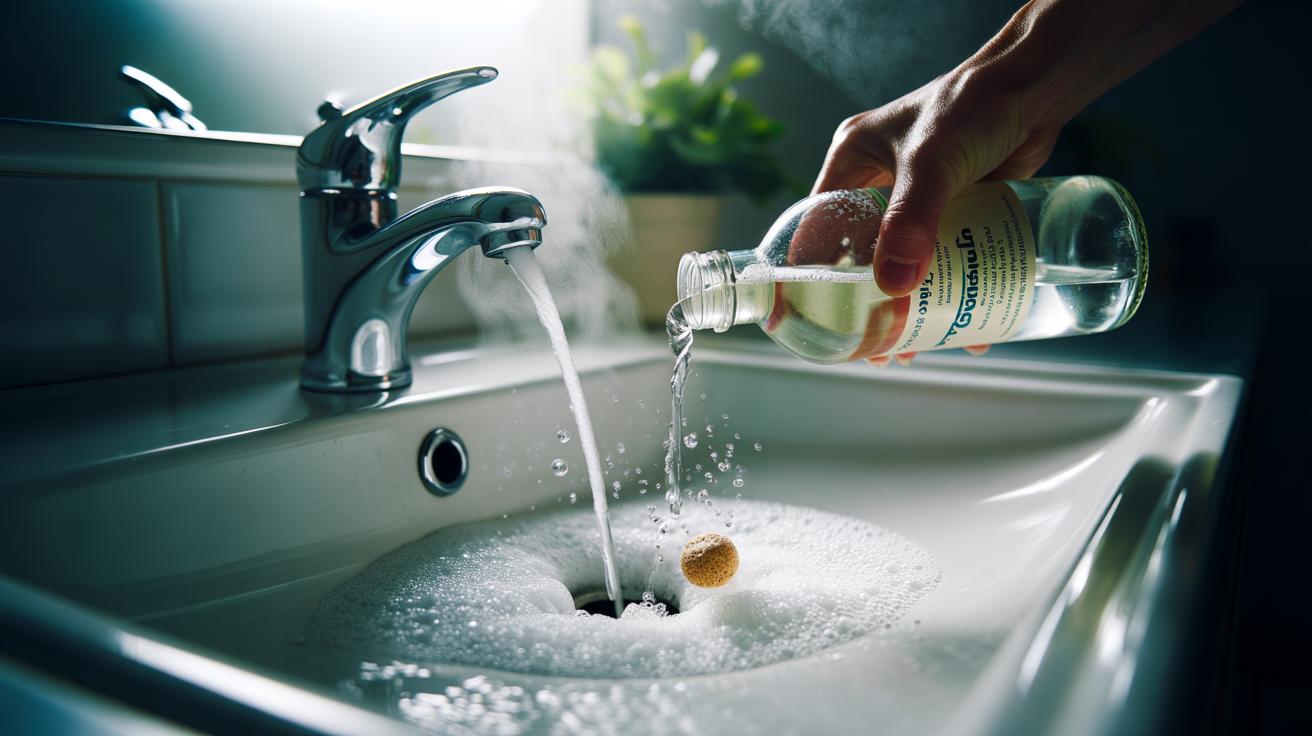
First, prepare the drain. Remove any visible gunk from the strainer. If water stands, bail it to expose the opening. Measure roughly 100–150 g of bicarbonate of soda (about half a mug) and pour it straight into the plughole. Tap the pipe lightly to help the powder settle into the trap. Now, add 200–250 ml of white vinegar. Pour slowly. Expect a lively fizz. Do not premix in a jug—the reaction belongs inside the pipe. Cover the opening with a rubber plug or a damp cloth to encourage downward pressure and keep the bubbles working where they count.
Wait 15–30 minutes. Quiet homes benefit from patience; give the mixture time to percolate through the blockage. Finish with a hot rinse: 2–3 litres of very hot (not boiling) water. For PVC traps, avoid a kettle at full boil; let it cool slightly. If the drain remains sluggish, repeat once. Then add a quick plunge to dislodge stubborn hair mats. Never use this method immediately after pouring bleach or a commercial drain opener—mixing chemicals is dangerous. For maintenance, a monthly half-dose keeps soap scum at bay and neutralises odours without blasting your pipes.
When It Shines, When It Doesn’t
This method excels in bathroom basins, showers, and kitchen sinks where the enemy is organic: hair, soap scum, grease, coffee grit, toothpaste paste. The fizz scrubs the narrow bends of traps and offsets small sags in under-sink pipework where slime likes to settle. It’s brilliant after a roast or a marathon shampoo session. You’ll hear the difference: a healthy whoosh. For routine care, it outperforms most “maintenance” chemicals because it cleans without corroding.
But there are limits. No amount of bicarb and vinegar will dissolve a cotton bud, a dropped bottle cap, or a hard fatberg deep in the stack. It’s the wrong tool for heavy limescale in hard-water zones or for tree root ingress outside. Toilets? Not ideal—the long path and large bore dilute the reaction’s punch. If you notice repeated backups, gurgling in adjacent fixtures, or grey water rising in the bath when the washing machine drains, the issue may be further down the line. That’s a plumber’s territory: rodding, jetting, or inspecting with a camera. Use chemistry for film and fluff; use tools for objects and structural faults.
Smarter Than Shop Chemicals: Cost, Safety, and Sustainability
Household bicarb and vinegar deliver three wins. Cost: pennies per use versus pounds for caustic gels. Safety: no caustic burns, no choking fumes, less risk to plastics and seals. Environment: fewer harsh residues down the drain, and packaging you likely already own. In UK supermarkets, a kilo of bicarbonate and a litre of budget white vinegar can last months. That thrift matters during a cost-of-living squeeze. There’s also peace of mind. You’re not one splash away from ruined clothing or a scarred worktop, and you’re not courting a heat-producing reaction in an old S-trap.
| Option | Typical Cost Per Use | Best For | Pipe Safety | Key Cautions |
|---|---|---|---|---|
| Bicarb + Vinegar | £0.20–£0.40 | Hair, grease, soap film | Gentle on PVC/metal | Don’t mix with bleach or cleaners |
| Caustic (Sodium Hydroxide) | £1–£2 | Heavy grease clogs | Can damage plastics, seals | Burn risk; heat generation |
| Acidic (Sulphuric/Biocide) | £2–£4+ | Scale, tough organic matter | Corrosive; ventilation needed | Severe burn/fume hazard |
One final safety note: never combine products. If you’ve already dosed the drain with a shop chemical, flush thoroughly with water and wait before trying the DIY method. When in doubt, stop and call a professional.
In a country of old houses and quirky plumbing, the quiet fizz of bicarbonate and vinegar is a small, effective rebellion against blockages and harsh chemicals alike. It’s simple. Repeatable. Cheap. And it’s kinder to pipes than most of the angry potions on the shelf. Next time your shower sulks or the sink gurgles, try the cupboard-first approach and listen for the whoosh of victory. Most slow drains respond within half an hour. What’s your go-to home fix when something clogs, and which stubborn drain are you finally ready to tame this weekend?
Did you like it?4.7/5 (20)