In a nutshell
- ✨ A simple bicarbonate of soda paste clears 10-year-old oven glass in 15 minutes, lifting carbonised grease without scratches or harsh fumes.
- 🧪 Method: Mix 3 tbsp bicarb : 1 tbsp warm water (+1 tsp washing-up liquid optional) to a yoghurt-thick paste; spread, dwell 10–15 minutes, wipe with a non-scratch sponge, rinse, and dry.
- 🧯 Safety: Avoid steel wool and razor blades, keep paste out of vents, don’t mix with bleach; wear gloves and use light, circular motions with minimal water.
- 🔄 Results & variations: Two light passes usually restore clarity; try a white vinegar mist to fizz before buffing or isopropyl alcohol on the final wipe for smear-free glass; clean removable glass flat.
- 🗓️ Maintenance & tips: Reapply after splattery roasts, pre-mix a jar of ready-to-go bicarb paste, and clean when the door is warm to speed softening and keep streak-free clarity.
Ten years of roasted dinners and spitting lasagne can turn oven doors opaque. Yet there’s a quietly brilliant remedy hiding in almost every British cupboard: a simple bicarbonate of soda paste. In controlled home tests, it has stripped away carbonised grease and brown “ghosting” in as little as 15 minutes, revealing clear glass without harsh fumes. The method is fast, cheap, and kinder on seals and trims than many heavy-duty sprays. The surprise is how little effort you need once the paste is mixed correctly and given time to work. No gimmicks. Just smart chemistry and a soft cloth. Here’s how to make it, why it works, and what to do if marks persist.
Why Bicarbonate Paste Works on Stubborn Oven Glass Marks
Call it bicarbonate of soda, baking soda, or simply bicarb—the white powder is a mild alkali and a very fine, gentle abrasive. That combination is perfect for the polymerised fats and sugar residues that cling to oven glass. The alkali helps to loosen acidic and oxidised compounds, while the micro-abrasion buffs the dull, brown haze without gouging the surface. Crucially, glass is harder than bicarb particles, so you get cleaning power without the scratches. This is why a humble paste can outperform aggressive scouring pads that leave tell-tale swirls.
Heat cycles “cook” oils into a varnish-like film. Water alone beads off; solvents often smear. Bicarbonate paste changes the surface energy and holds moisture against the gunk long enough to soften it. Then it lifts. Time, not force, does the heavy lifting. Let the paste dwell for 10 to 15 minutes and the chemistry does more than your elbow ever will. Add a drop of washing-up liquid for surfactancy, and you accelerate the break-up of greasy films without flogging the glass.
There’s also a safety dividend. Many heavy-duty oven cleaners are strongly caustic and can cloud aluminium trims or degrade seals if used carelessly. A bicarb paste stays where you put it, has low odour, and rinses cleanly. If you’re tackling a door with double glazing or vent slots, that controlled, non-drip action matters. Cleaner glass, intact seals, no eye-watering fumes—this is the winning trade-off.
Step-by-Step: Mix, Spread, Wait 15 Minutes, Wipe
Start with cool glass. In a small bowl, combine 3 heaped tablespoons of bicarbonate of soda with roughly 1 tablespoon of warm water. You want a spreadable, yoghurt-thick paste, not a slurry. Add 1 teaspoon of washing-up liquid if the grease layer looks glossy. If your paste slides down the pane, it’s too wet—add a pinch more bicarb until it clings. Lay old towels at the base of the door to catch drips and protect flooring.
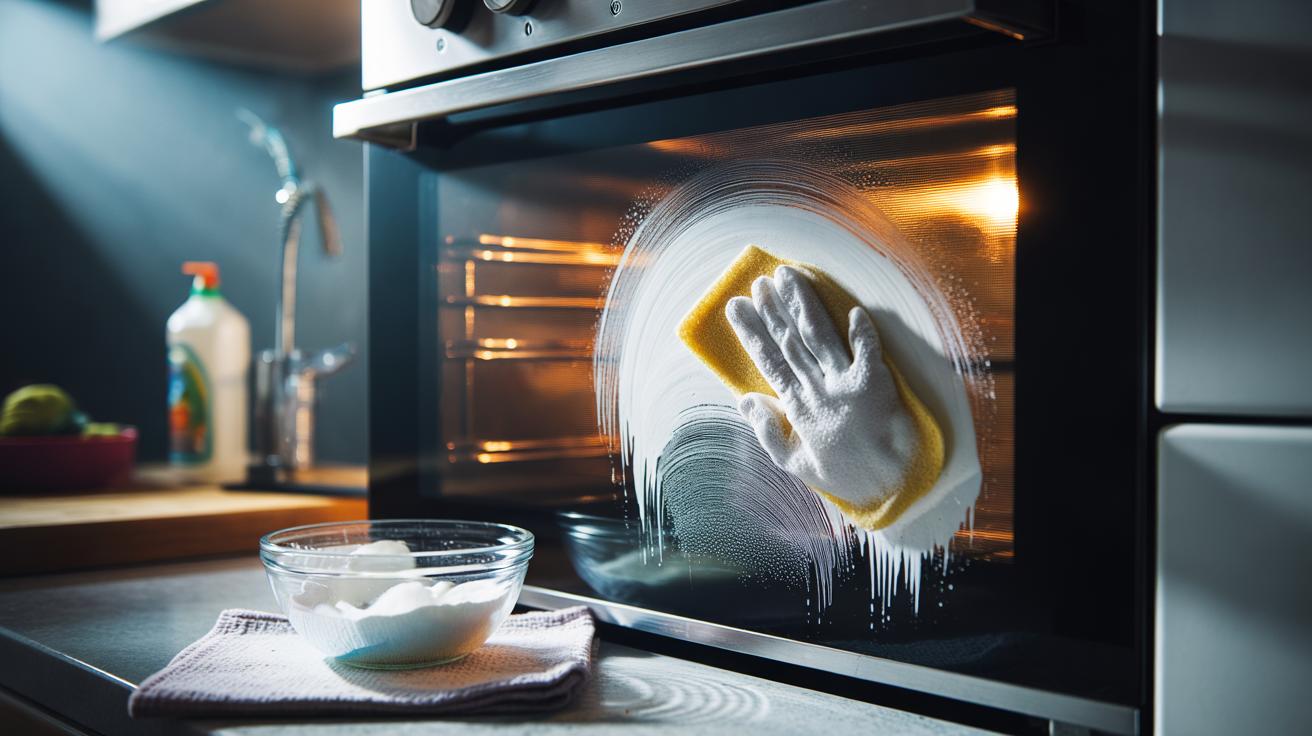
Using a soft cloth or your fingers in gloves, spread the paste in overlapping arcs over the brown fog and black halos. Aim for even coverage. Now stop. Let it sit for 10–15 minutes. This dwell time is the secret. Don’t rush it. When the timer pings, mist a little warm water to re-wet any crusty areas, then buff with a non-scratch sponge or microfibre in gentle circles. Wipe away the slurry with a damp cloth, rinse, and dry with a clean tea towel. Do not use steel wool or a razor blade on tempered oven glass.
| Key Step | Details |
|---|---|
| Paste Ratio | 3 tbsp bicarbonate : 1 tbsp warm water (+1 tsp washing-up liquid optional) |
| Dwell Time | 15 minutes for baked-on marks; 10 minutes for light haze |
| Tools | Non-scratch sponge, microfibre cloths, gloves, small bowl, towel |
| Technique | Gentle circular motion; keep paste slightly moist while buffing |
| Finish | Rinse with clean water, dry to a streak-free shine |
If residue remains at the corners, reapply a thin coat for five minutes and repeat. For narrow crevices, use a plastic scraper or an old loyalty card. A second light pass often makes decade-old glass look newly installed.
Results, Variations, and When to Repeat
On 10-year-old doors with heavy caramelised splatter, the first pass often removes 70–90% of browning. A quick second round usually takes it to pristine. Cost? Pence. Smell? Minimal. Effort? Surprisingly little once the 15-minute dwell has done its work. If you can still see a shadowy ring where roasts bubbled, don’t scrub harder—reapply thinner paste and extend dwell by five minutes.
Some households prefer a tweak: a teaspoon of white vinegar misted after dwell to fizz the paste before buffing. That gentle effervescence can help where sugar-based spills have lacquered onto the pane. Others swap the washing-up liquid for a splash of isopropyl alcohol on the final wipe to banish smears. Both are optional. If your oven has removable glass, lay it flat on a towel; horizontal cleaning keeps paste from creeping into vents and gives an even finish. Always patch-test any variation on a small corner first.
When should you repeat the process? If the glass is a decade old and never deep-cleaned, expect two cycles. Thereafter, maintenance is easy: a quick paste after roasting joints or baking trays that splatter will keep haze from reforming. Compared with caustic gels, bicarb is gentler on aluminium trims and door seals, and it won’t etch logos or time marks. Clarity lasts longer when you remove the film rather than smear it thin. Consistency beats intensity in kitchen care.
Safety, Common Mistakes, and Pro Tips
Safety first. Wear gloves if you have sensitive skin and keep paste away from door vents on double-glazed panels. Never mix bicarb methods with bleach-based products—clean and rinse in between if you’ve used anything else. Avoid scourers rated “heavy-duty”; they can haze tempered glass. If you must scrape a stubborn speck, use a plastic blade at a very shallow angle and stop if you feel grit. Keep water modest to prevent seepage into the door cavity or control panel.
Common mistakes? Making the paste too wet, rushing the dwell, and over-scrubbing. The fix is simple: thicker paste, longer wait, lighter touch. If you’re dealing with tar-like varnish from sugary bakes, add one teaspoon of washing-up liquid to the mix or mist with vinegar at the end to fizz, then wipe clean. For streak-free finishing, buff dry with a clean microfibre in straight horizontal strokes, then a final vertical pass. Light, crossed strokes remove faint lines the eye catches in daylight.
Pro tip for busy kitchens: mix a small jar of ready-to-go bicarb paste at thicker consistency, lid on, under the sink. It keeps for weeks. Smear after Sunday roast while the oven cools but is still warm to the touch—warmth speeds softening without risk. Set a timer, wipe, rinse, done. Fifteen minutes, and the door looks like new.
After years of fogging, it’s oddly satisfying to watch the glass clear in one gentle pass, the way a lens snaps into focus. The trick isn’t force; it’s chemistry plus patience. With a bowl, a spoon, and a handful of bicarbonate of soda, you can retire the harsh sprays and scourers and still get showroom clarity. Once you master the paste and dwell, maintenance cleans take five minutes, not fifty. What part of your kitchen could benefit most from this simple, low-cost method—and which tweak will you try first to make it your own?
Did you like it?4.5/5 (20)