In a nutshell
- 🧩 The One-Touch Rule means handling each item once—make a single decision and return it to its home—reducing decision fatigue and mess at the source.
- 🏠 Inspired by Japan’s 5S and home design (e.g., the genkan), it makes the “right” action the easiest: visible storage, shallow drawers, and kid-level shelves.
- 🗂️ Room-by-room tactics: hall key tray and post rack; kitchen shallow inserts; bedroom hooks for re-wear; bathroom caddies—plus clear labels and strategic duplicates.
- 🧰 Tools and habits: favour hooks, trays, and open bins; store items where used; adapt homes as behaviour shifts; use 5S, a nightly five-minute reset, visual cues, and small rewards.
- ⏱️ Benefits: a “cleaning vaccine” effect—less shuffling, faster resets, quieter spaces—and the feel of zero-effort tidiness in everyday British homes.
Imagine gliding through your home and never needing to tidy “later”. That’s the quiet power of Japan’s One-Touch Rule: a household habit that means every object is handled once, sent home, and forgotten. It’s simple. It’s swift. And it quietly eliminates the churn of constant straightening. Inspired by the country’s everyday rituals and the industrial discipline of 5S, this approach shrinks decision fatigue and stops mess from forming in the first place. Touch each thing once, make one decision, and be done. There’s no dramatic overhaul, just small, repeatable moves that feel almost effortless. Here’s how it works—and how to make it stick in a British household, today.
What Is the One-Touch Rule?
At its core, the One-Touch Rule means you handle an item once before it returns to its rightful place. Post lands on the hallway console? Open, sort, and file or bin immediately. Jacket comes off? Onto the hook, not the chair. One contact, one conclusion, no loose ends. The magic isn’t moral virtue; it’s design. You build a home where the easiest move is the right move, so tidiness becomes the path of least resistance.
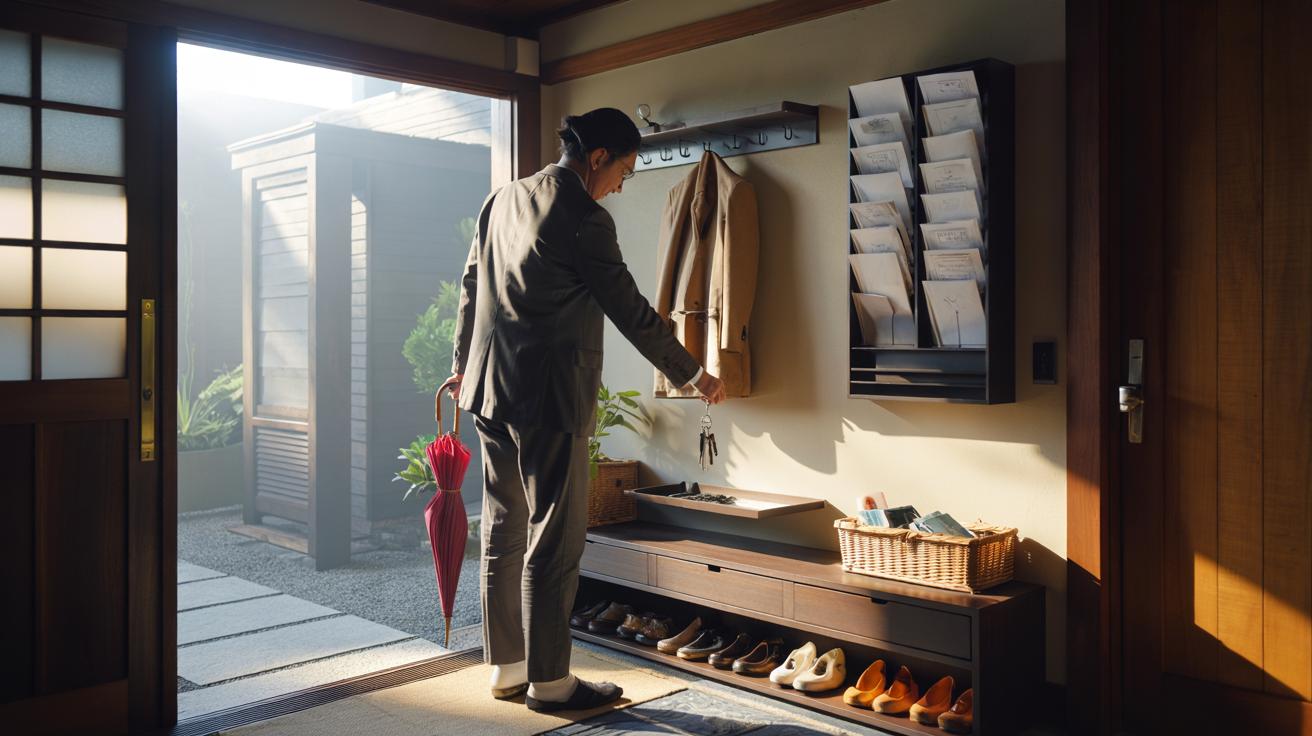
Japanese homes model this brilliantly. The genkan (entrance) channels shoes into a single zone. Kitchens favour shallow storage, so tools are visible and quick to return. Even children’s items are corralled on low shelves, reducing the number of touches—and the amount of nagging—required. The result: less searching, less shuffling, less stress.
Think of it as a cleaning vaccine rather than a cure. You prevent clutter at source. By eliminating second touches, you eliminate tomorrow’s tidy-up.
How to Apply It in Every Room
Begin with your friction points. Where do things pile up? Entrance, kitchen worktops, bedside tables, coffee table. Install a “first place” and a “final place” that are obvious at a glance. In the hall, that might be a narrow tray for keys and a vertical letter rack for post. In the living room, a lidded basket for throws. Keep distances short—if a coat hook is four paces away, a chair will win every time. Make the correct action faster than the messy one.
| Room | Typical Clutter | One-Touch Action |
|---|---|---|
| Hallway | Post, keys, shoes | Open-sort bin/file; keys to tray; shoes to rack |
| Kitchen | Utensils, receipts, packaging | Shallow drawer inserts; receipts straight to envelope or app |
| Bedroom | Clothes “chair”, jewellery | Hooks for “re-wear”; dish for jewellery by mirror |
| Bathroom | Toiletries, towels | Daily caddy; towel hook per person |
Keep containers obvious and open. Label shelves and boxes with plain words—“Batteries”, “Tape”, “Returns”—so anyone can put things back without thinking. Use duplicates strategically: a second pair of scissors by the post station saves a trip and a later tidy. Finally, pair actions: kettle on, surfaces cleared; coat off, bag emptied; TV off, blanket folded. Link small habits to existing routines and the rule runs on autopilot.
Tools and Habits That Make It Stick
Good kit matters, but only if it reduces effort. Opt for hooks over hangers, trays over deep drawers, open bins over lidded boxes. Store items where they are used, not where you think they “belong”. Toothpaste at the basin, charging leads by the sofa, pet leads by the door. If an item migrates, its home should migrate too. That’s the lesson from Japan’s adaptable storage culture: homes evolve with behaviour.
Borrow from 5S: sort (remove the excess), set in order (assign homes), shine (clean as you go), standardise (use labels and layouts), sustain (review weekly). Keep a five-minute “reset” every evening—lights out, quick sweep, baskets emptied. Use visual cues: a single empty tray signals mail needs sorting; an overfull hook means a declutter. Reward helps. Brew a tea after your reset. Tidy first, then sip. Small wins cement the loop, making the neat choice the natural one.
There’s no need to be a minimalist or to banish personality. The One-Touch Rule simply choreographs the dance between you and your things so the music never stops. It swaps grand cleaning sessions for tiny, nearly invisible nudges that happen in real time. You’ll notice it first as silence—the absence of nagging piles and panicked searches for keys. Then as time—minutes you get back daily. Handle once, finish once, relax once. If you tried this for a week, which single spot in your home would you “one-touch” first, and what small change would make the right action irresistibly easy?
Did you like it?4.4/5 (30)