In a nutshell
- 🧂 The 4-6-1 rule means 4 parts salt, 6 parts aromatics, and 1 part kicker (sugar or heat), scaled by any unit; the ratio, not the measure, is the secret.
- 🔥 Application: aim for 30–35 g/kg total rub, dry-brine 6–24 hours uncovered, start at 220°C to colour, then roast at 170–180°C, and rest generously for juicy slices.
- 🔬 Science: salt penetrates and retains moisture, aromatics build a Maillard-rich crust, and the kicker adds colour and balance; choose coarse salt and heat-stable dried spices.
- 🧰 Variations: keep the framework, swap flavours—mushroom powder, Parmesan rind powder, or a pinch of MSG for umami; use maple or malt sugar, or let chilli/mustard replace sweetness.
- ⚠️ Pitfalls and fixes: avoid over-salting (weigh rub, watch added salt), prevent burnt crusts (moderate sugar, foil once browned), cure bland centres with time, and dry poultry skin for crisp results.
Britain’s most reliable roasts aren’t the result of mystique; they’re the product of a clear, repeatable method. Enter the 4-6-1 seasoning rule, a simple ratio chefs lean on when the Sunday joint needs to sing without fuss. It’s adaptable, fast, and forgiving. Use “parts” to scale up or down, lean into your pantry, and watch the crust transform from timid to thunderous. The secret is proportion, not potions. Whether you’re roasting a rib of beef, a shoulder of pork, or a cauliflower for a meat-free centrepiece, this framework keeps salt, aroma, and sweetness in harmony—so your roast tastes seasoned through, not just sprinkled on.
What the 4-6-1 Rule Means
The 4-6-1 rule describes a dry rub mixed in parts: 4 parts salt, 6 parts aromatics (herbs, spices, umami boosters), and 1 part “kicker” (usually a touch of sugar for colour and balance, or heat if you dislike sweetness). Use the same unit for each part—teaspoons for a small batch, tablespoons or grams for a large joint. For example, 4 tsp coarse sea salt, 6 tsp mixed aromatics, 1 tsp brown sugar. It’s the ratio that matters, not the absolute measure.
Why these proportions? Salt does the heavy lifting: it penetrates, amplifies flavour, and helps retain moisture. Aromatics add character—think black pepper, garlic granules, smoked paprika, ground fennel, dried thyme, even powdered porcini for savoury depth. The kicker rounds edges: a little brown sugar aids caramelisation and balances bitterness; chilli flakes or mustard powder offer lift without sweetness if you prefer a drier profile. Four grounds the seasoning, six paints the picture, one frames it. Choose kosher or coarse sea salt for even distribution, and favour dried aromatics for heat resilience and a consistent crust.
Applying It to Beef, Pork, Lamb, and Chicken
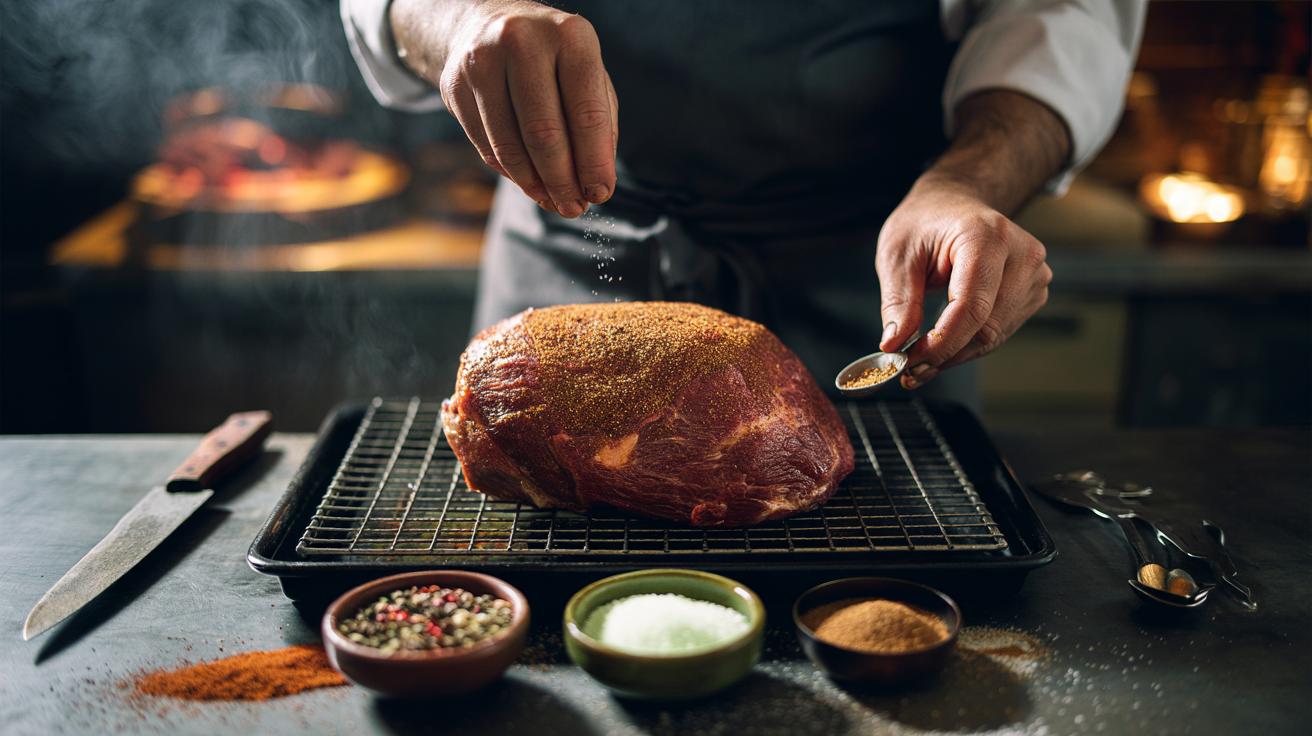
Season by weight as well as ratio. A solid baseline: use roughly 30–35 g of total rub per kilogram of meat. Because salt is 4 of the 11 parts, this delivers about 1.1–1.3% salt by meat weight—enough to season deeply without harshness. Mix the rub, pat the joint dry, and coat evenly, pressing into crevices. For best results, refrigerate uncovered on a rack for 6–24 hours. This dry-brine window draws seasoning in and dries the surface, setting you up for a crackling crust.
Beef loves black pepper, garlic, and mustard powder. Pork excels with fennel seed, paprika, and a little brown sugar. Lamb sings with rosemary, cumin, and lemon zest (skip sugar, use Aleppo pepper as your “1”). Chicken thrives on paprika, thyme, and onion granules, with a restrained sugar note for bronzing. Roast techniques still matter: start hot to set colour (220°C, 15–20 minutes), then drop to 170–180°C until done. Rest generously—10 minutes for a small bird, up to 45 minutes for large joints. Season early, roast thoughtfully, rest always. The ratio does the groundwork; timing and temperature complete the craft.
The Science Behind Salt, Aromatics, and Sweetness
Salt diffuses into the meat over time, dissolving muscle proteins and helping retain juices during cooking. That’s why the dry-brine rest matters; mere minutes on the counter season only the surface. Aromatics are mostly about the crust: oil-soluble compounds in herbs and spices bloom under heat, releasing fragrant molecules that mingle with Maillard products for depth and savouriness. Powdered forms, used judiciously, deliver a tighter, more even coating than leafy rubs alone.
The “1” in the equation—often a hint of sugar—supports browning via caramelisation and promotes a glossy, appetising finish. Worried about burning? Aim sugar at the outer surfaces and keep it modest; the ratio already does that. For poultry skin, use light brown sugar or swap in malt powder for a subtler sweetness that won’t scorch as quickly. Prefer heat to sweet? Let chilli, mustard, or white pepper fill the “1” slot. The ratio is flexible, the chemistry is not: salt seasons, aromatics perfume, the kicker nudges colour and balance.
Variations, Pantry Swaps, and a Quick Table
The 4-6-1 rule is a framework, not a straitjacket. Keep the structure, change the cast. Swap coarse sea salt for kosher; trade smoked paprika for sweet if your pan sauces run bitter; replace brown sugar with maple sugar for a cleaner finish. Add umami within the “6” via mushroom powder, grated Parmesan rind powder, or a pinch of MSG. For chilli-shy diners, fold in ground coriander and citrus zest to lift the top notes without heat. Hold the ratio, riff on the ingredients. Below, sample blends show how to tune flavour by protein while staying inside the 4-6-1 guardrails.
| Roast | 4 (Salt) | 6 (Aromatics Example) | 1 (Kicker) | Notes |
|---|---|---|---|---|
| Beef Sirloin | Kosher salt | Black pepper 3, garlic granules 2, dried thyme 1 | Mustard powder | Skip sugar for a drier, peppery bark |
| Pork Shoulder | Coarse sea salt | Fennel seed 2, smoked paprika 2, onion granules 2 | Light brown sugar | Fennel + sugar = classic sausage-shop vibe |
| Chicken | Kosher salt | Paprika 2, garlic 2, dried thyme 2 | Demerara sugar | Crisp skin, gentle sweetness, golden colour |
| Lamb Leg | Coarse sea salt | Ground cumin 2, rosemary 2, black pepper 2 | Aleppo pepper | Chilli warmth instead of sugar |
| Cauliflower | Kosher salt | Curry powder 3, turmeric 1, garlic 2 | Maple sugar | Plant-forward, roasts to amber and fragrant |
Common Mistakes and How to Fix Them
Over-salting usually stems from layering salted butter or stock cubes on top of an already balanced rub. Weigh the rub, stick to the 30–35 g/kg guide, and keep other salty elements in check. If you do tip over, serve with unsalted sides and a squeeze of lemon to lift and dilute. Burnt crusts often mean too much sugar or too high a starting temperature—dial the sugar back or shield with foil once colour sets.
Another pitfall: bland centres. That’s a timing issue. Salt needs hours, not minutes. Aim for an overnight rest for large joints, at least 2–3 hours for smaller ones. Soggy poultry skin? Your surface wasn’t dry. Leave the bird uncovered in the fridge so the skin dehydrates slightly. Bitter herbs occur when delicate leaves hit fierce heat; use sturdy dried herbs in the mix and finish with fresh herbs in the resting juices. Finally, don’t chase flavour with quantity. Chase it with balance. The 4-6-1 rule gives you that map, every single time.
Mastering roasts is less about recipes and more about frameworks. The 4-6-1 seasoning rule removes guesswork, builds confidence, and rewards patience with a bronzed crust and a seasoned interior that tastes like itself—only better. Keep the ratio, adjust the personalities, and respect the rest. The roast will repay you. Your oven becomes a finishing tool, not a lottery. What joint will you try first with 4-6-1—and which aromatic trio will you choose to write your roast’s signature?
Did you like it?4.4/5 (28)