In a nutshell
- 🔧 The £1.50 thermostat hack uses a foam draught gasket and plugs the cable hole to stop cold-air leaks that trick the sensor, then tweaks the set-point and schedule for smarter heating.
- 💡 Especially effective in homes with electric heating (panel heaters, storage heaters, heat pumps), the fix can cut monthly electricity use by up to half by reducing unnecessary runtime.
- ❄️ Step-by-step: seal the backplate, block the void, then set 18–19°C by day and 15–16°C at night (smaller setbacks for a heat pump), and monitor comfort before shaving another degree.
- 📊 The physics: every 1°C reduction can save about 7–10%; an example scenario shows daily use dropping from 18 kWh to 9 kWh, slashing bills at typical UK unit rates.
- ✅ Avoid smothering vents, check thermostat placement (prefer interior walls), align storage heater times with tariffs, and track kWh with a smart meter for a week to verify savings.
Britain’s energy gurus say the cheapest upgrade this winter isn’t a smart meter or a shiny gadget. It’s a £1.50 tweak to your existing thermostat that stops it fibbing about the room temperature and driving electric heaters harder than necessary. The trick? Draught-proof the wall plate, plug the cable hole, then reset your set-point and schedule. Sounds basic. Works brilliantly. In flats with electric panel heaters, storage heaters, or air-source heat pumps, correcting a “cold wall” reading can shrink run-time dramatically. In poorly sited thermostats, that tiny cold leak can cost you pounds every single day. Here’s how a foam ring, five minutes, and a cooler set-point can, in some homes, halve the monthly electricity bill.
What Is the £1.50 Thermostat Hack?
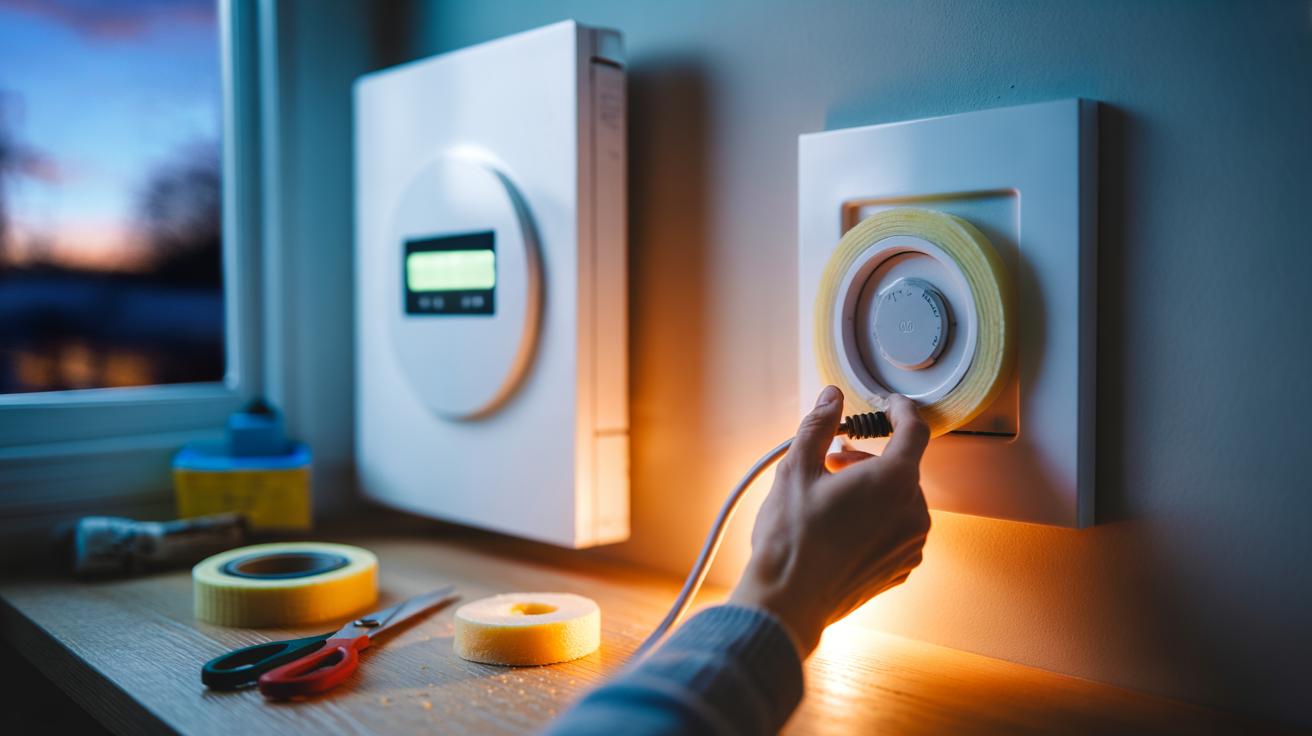
The “hack” combines three no-nonsense moves: seal the back of your thermostat with a cheap foam draught gasket, block the cable hole that lets cold air spill onto the sensor, and set a slightly lower daytime temperature with a deeper night-time setback. Cost: about £1.50 for foam tape or a ready-made gasket from any DIY aisle. Time: one kettle’s boil. The aim is to stop the thermostat from believing the room is colder than it really is, a common issue when it’s mounted on an external wall or above a cavernous cable chase.
Why it matters for electricity bills: if your home relies on electric heating—panels, infrared, oil-filled radiators, underfloor mats, or a heat pump—the thermostat decides how long high-wattage kit stays on. A tiny false reading, even 1–2°C, translates into hours of extra runtime across a week. Fix the measurement, trim the set-point to 18–19°C, and add a 15–16°C overnight setback. Many households report drops of 25–50% in kWh when this is paired with sensible scheduling. You’re not suffering; you’re removing an invisible leak in control.
Step-by-Step: Seal, Set, and Save
First, locate your main room thermostat. If it’s battery-powered, pop off the front cover gently. If it’s wired, consult the manual; most allow the plastic fascia to lift without exposing terminals. If uncertain, switch off the relevant circuit at the consumer unit and proceed cautiously. You’re not rewiring anything—just draught-proofing.
Create a thin ring of foam draught tape (3–5 mm thick) and press it onto the back-plate so it contacts the wall when reassembled. Plug any visible cable hole with a pea-sized piece of putty or a short twist of tissue; the goal is to stop cold air from the void behind the wall. Refit the cover firmly so the sensor reads true room air, not a hidden breeze. This five-minute step can stop your thermostat from lying to your heater.
Now reset your heating programme. Daytime: 18–19°C in occupied rooms. Overnight or when out: 15–16°C. Use “advance” or “boost” features sparingly—short, purposeful bursts. If you run a heat pump, keep setbacks modest (1–2°C) to suit its efficiency profile. Monitor your smart meter or daily reads for a week. You’re looking for fewer long cycles and a steady, comfortable feel. Comfort first, then shave another degree if you’re still toasty.
The Science and the Savings: Why Small Changes Deliver Big Cuts
Thermostats respond to air temperature, not your hopes. Cold air sneaking from a wall void can trick sensors into calling for heat longer. For high-power electric heaters, that means big kWh in short order. Sealing the back restores accuracy; lowering the set-point compounds the win. Physics helps: each 1°C reduction can trim heating demand by roughly 7–10% in many homes. Pair that with tighter schedules and reduced overshoot, and deep savings emerge.
Halving the bill isn’t guaranteed, but it’s surprisingly achievable in leaky flats with electric-only heating where thermostats were misreading. Below is an illustrative snapshot using a typical unit rate and realistic runtimes:
| Scenario | Thermostat Setting | Heating kWh/day | Unit Rate | Approx. Cost/Month |
|---|---|---|---|---|
| Before (draughty reading) | 21°C constant | 18 kWh | £0.28/kWh | £151 |
| After (sealed + 18.5°C day, 16°C night) | Scheduled | 9 kWh | £0.28/kWh | £76 |
Illustrative only; actual results vary by insulation, occupancy, and weather. The point stands: correct the sensor, trim the target, schedule smartly, and those kWh fall away. Less runtime, same comfort. That’s the whole game.
Common Pitfalls, UK-Specific Tips, and When It Won’t Work
This hack targets homes where heating electricity dominates the bill—think all-electric flats, storage heaters, panel heaters, or heat pumps. If your radiators are driven by a gas boiler, the thermostat chiefly affects your gas spend, not electricity, though improved control still saves overall. Don’t smother thermostats that rely on air vents; sealing belongs behind the plate, not over the sensor. And avoid extreme setbacks on heat pumps, which prefer gentle, steady operation.
Placement matters. If your thermostat sits on an external wall, above a hole-ridden cable chase, or near a draughty door, it is a prime candidate. Consider moving it when you next redecorate—an interior wall at chest height in a representative room works well. Small relocations deliver outsized gains. Also, check storage heater timing aligns with your tariff’s off-peak window; simple schedule tweaks compound the thermostat fix. Finally, test changes for seven days, log kWh, then iterate. The best settings are specific to your home, your insulation, and your routine. Measure, don’t guess.
In a winter of rising costs, a £1.50 foam ring and a calmer set-point feel almost subversive. Yet they work because they give your thermostat the one thing it needs to make good decisions: truthful air. Seal the back, block the cold leak, set a realistic target, and schedule with purpose. Many readers will see comfort hold steady while the meter slows. Will you try the £1.50 thermostat hack this week and share how many kWh you shave in the first seven days?
Did you like it?4.3/5 (28)