In a nutshell
- 🎯 The toilet paper roll trick uses spinning cardboard tubes on sofa edges/legs to remove traction, making scratching unrewarding, with many owners seeing results overnight.
- 🧰 Step-by-step: gather toilet rolls, painter’s tape or removable putty, and kitchen towel tubes; fit loosely so they spin; place a sturdy sisal post beside the blocked area, scent with catnip, and reward correct scratches.
- 🧠 Behavioural science: converts a rewarding habit into a dud (extinction) by creating a non-grippy, unstable surface while offering a high-payoff alternative to redirect behaviour quickly.
- 🛡️ Safety and ethics: keep tubes loose, avoid sticky residues on upholstery, check for wear, supervise kittens, and note this is not punishment but smart choice architecture.
- ♻️ Cost and practicality: near zero-cost, recyclable, and reversible; deploy for a week, remove, and redeploy if needed; scale for multi-cat homes with multiple posts.
Every cat owner knows the moment. You hear the rasping scratch, sprint into the lounge, and find new threads prised from a cherished sofa. It feels personal. It isn’t. Your cat is meeting a powerful instinct. Enter an unexpectedly elegant fix sweeping UK households: the toilet paper roll trick. It’s cheap, recyclable, and surprisingly chic if you do it well. Most importantly, it nudges feline behaviour, not through punishment but by reshaping the choice architecture. Within a single night, many people report a marked drop in damage. Sound fanciful? Here’s how this simple wobbling sleeve of cardboard changes the game.
How the Toilet Paper Roll Trick Works
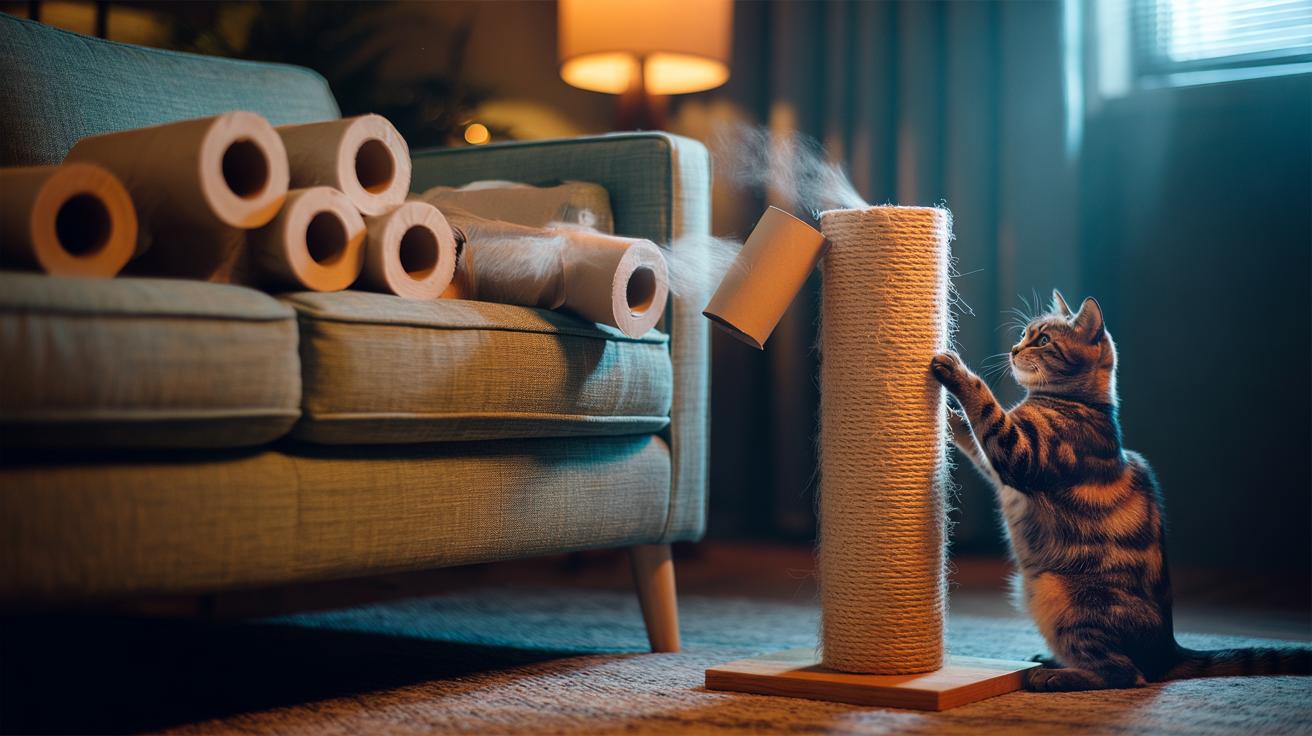
Cats scratch for three big reasons: to stretch and condition claws, to leave visual and scent markers, and to decompress. Sofas tempt them because the fabric offers satisfying resistance and height. The toilet paper roll trick hacks that physics. You slide lightweight cardboard tubes onto a sofa edge or chair leg so they free-spin. When paws dig in, the surface doesn’t hold; it moves. No resistance, no payoff.
This micro-failure matters. Scratching is self-rewarding. If the surface slips, the reward vanishes and the habit loop is interrupted. The tube’s soft thud and wobble create a mildly unpredictable response many cats dislike, yet it’s benign and safe. The goal is not to scare your cat; it’s to make the wrong target uninteresting. Then you pair the “no fun” spot with a “yes” option that feels amazing: a sturdy sisal post nearby.
Because cats revisit their favourite zones, changing the tactile feedback at that exact corner often works overnight. It looks like magic. It’s simply better engineering for feline instincts.
Step-by-Step Setup in Minutes
Gather six to ten empty toilet paper rolls (or two kitchen towel tubes cut in half), some painter’s tape or removable putty, and a blunt pencil or hole punch. Identify the hotspots: outer sofa corners, arm fronts, and the first 20–30 cm of chair legs. Slip tubes onto legs where they can spin freely. For sofa edges, gently tape two or three tubes together into a sleeve and rest them along the seam your cat targets. Do not fix tubes tightly—movement is the secret sauce.
| Item | Purpose | Est. Cost |
|---|---|---|
| Toilet paper rolls | Free-spinning, no-grip surface | Free |
| Painter’s tape/removable putty | Temporary anchoring without residue | £2–£4 |
| Kitchen towel tubes | Longer sleeves for sofa arms | Free |
| Catnip/silvervine | Attract to approved scratcher | £3–£6 |
| Sturdy sisal post | Rewarding “yes” target | £15–£35 |
Place the preferred scratcher within paw-shot of the booby-trapped area and scent it with catnip. Reward every healthy scratch with a treat for two or three days. Never bind, glue, or create gaps that could catch claws. The configuration should be loose, simple, and boring to you—but infuriatingly unscratchable to them.
Why It Works (And the Behavioural Science)
Behaviour change hinges on outcomes. When scratching a sofa yields deep grip and a satisfying tear, your cat’s brain files that as a win. The roll trick removes the win by producing an unstable, non-grippy surface, turning a previously rewarding action into a dud. That’s classic extinction: no pay-off, no persistence. Add a high-payoff alternative right beside it and you’ve engineered a swift swap.
The wobble matters. Cats prefer predictable traction and vertical resistance. Spinning tubes deliver neither, while also slightly shifting under weight. It’s not scary—just ineffective. And cats are efficient. After one or two thwarted attempts, many redirect to the nearby post that offers the deep dig, the stretch, and the lovely scent cue you’ve provided. Interrupt the habit at the exact trigger point and you can rewrite it overnight. Science also says novelty fades. Leave the tubes in place for a week, then remove and monitor. If backsliding begins, redeploy for another cycle.
Fine-Tuning, Safety, and Ethical Tips
Position is everything. Keep the scratcher so close to the blocked zone that it feels like the natural next move. Angle a tall sisal post slightly toward the cat’s approach route. Rub a tiny bit of olive oil or catnip spray into the fibres to boost appeal. Reward every correct scratch for 48 hours. Tiny wins. Big signal. This trick does not punish your cat; it makes the right choice obvious.
Safety first. Avoid sticky tapes that leave residue on fabric. Use painter’s tape or removable putty only on hard surfaces or on the tubes themselves, not the upholstery. Check daily for wear and replace any soggy or chewed cardboard. Kittens that mouth everything may need supervision; store tubes when you’re out. For multi-cat homes, set up multiple “yes” posts to prevent queuing. If your décor is precious, wrap tubes in neutral kraft paper or fabric offcuts for a subtler look while preserving the spin.
A cardboard sleeve that stops destruction overnight sounds delightfully thrifty because it is. The toilet paper roll trick turns physics and habit design into allies, making sofas dull and scratchers irresistible. It’s recyclable, reversible, and tuned to feline needs, not human frustration. Try it tonight, pair it with a great post, and watch your living room exhale. If you’ve got a determined scratcher, what corner will you outfit first—and what scent will you use to make the “yes” post undeniably tempting?
Did you like it?4.5/5 (24)